The Belle Epoque in Europe
Hungary
Budapest
Nationalism and Art Nouveau
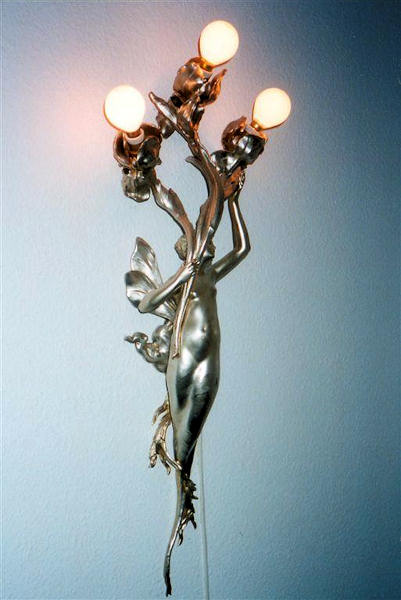
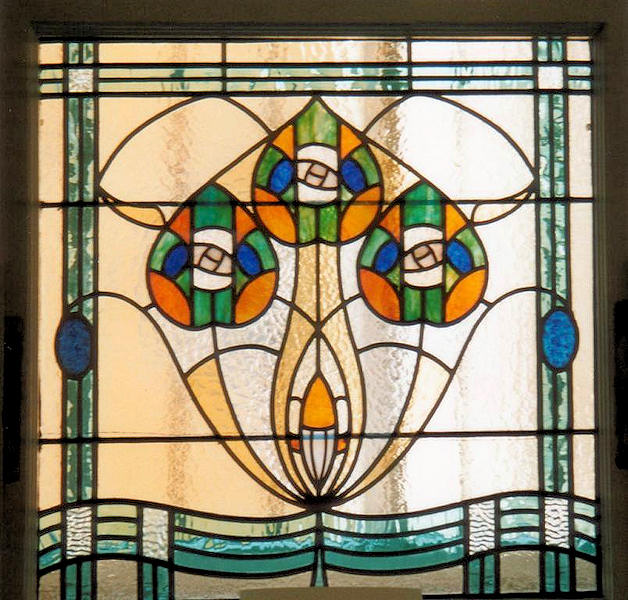
At the turning of the 19th century, a group of avant-garde artists, inspired by the European Art Nouveau, started acting against the popular eclecticism of that epoch. The members of this "Secession" (common term in Vienna and Prague) being guided by Magyar and Asian rural traditions attempted to establish a national Hungarian style. The Hungarian architecture of the Secession is distinguished from contemporary constructions not only by its decorative style but also by the utilization of modern techniques (ferroconcrete, steel structures, glass) allowing the creation of large light rooms.
Historical Abstract
The compromise of 1867 established the Dual Monarchy of Austria-Hungary criticised by many, but it also met approval from others such as the Habsburg dynasty, the army common to both countries, the feudal aristocracy, the catholic church and the great trading and industrial families as well profiting by the peaceful years since 1875.
During this period, an impressive transformation of the Hungarian society could be observed. The task to create political institutions, an administration and a national budget was incumbent upon the aristocracy and the intelligentsia; the shareholders, incited by national emotions, took charge of the economical development. Both tasks were successfully accomplished: prosperity grew, capitals and gains increased, the living standard of the farming community improved in a spectacular way, a national art expanded.
Between 1890 and 1919, a large amount of Hungarian art collectors arose on the scene among which were many tycoons with immeasureable fortunes having acquired great merit in the extension of the national art treasure like Andrássy who bought many works of contemporary Hungarian artists and some innovators of the French painting such as Courbet, Rousseau, Monet…
It was about the same period when the intellectuals tried to strengthen the national identity by language and literature. All artistic expressions served from now on to bring out the sectionalisms. Most ancient folk traditions were reawoken in order to make forget the Austrian imprint. The Art Nouveau, arising at this time precisely, suited in an admirable way the political targets of the newly formed States or of the Cities aiming at shaking off the superiority of the Capitals. Architecture appeared as one of the privileged instruments of emancipation. When Prague and Budapest became big modern cities by reforming their urban development, the modern architects were just the persons needed.
In fact, the original political situation in Central Europe offered to the Art Nouveau architects the opportunity to build public monuments. This applied e. g. for Ödön Lechner and the construction of the Museum of Applied Arts in Budapest. Occasions of that type were rather uncommon in powerful countries such as France where public orders remained in the hands of the edified middle-class intellectuals.
All pictures of Budapest by courtesy of © KuKS Hannover.